Inertial Motion Capture
A wearable motion instrument that translates the orientation of the body into a live spatial model.
Movement as material
NIMU is a wearable motion instrument developed with Nahui Tecnologia y Desarrollo. Distributed sensing nodes make movement visible as both gesture and signal: the body is reconstructed as a responsive spatial model while its underlying orientation, acceleration, and angular velocity remain available for inspection.
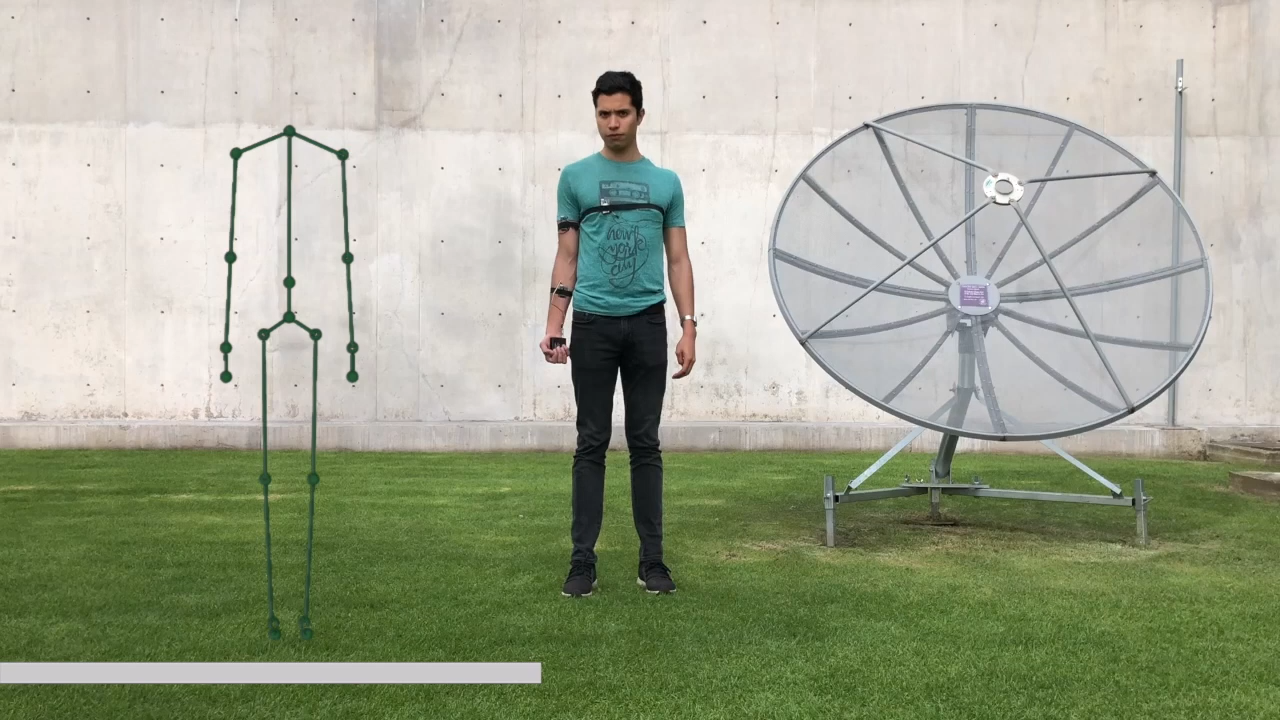
A body assembled from signals
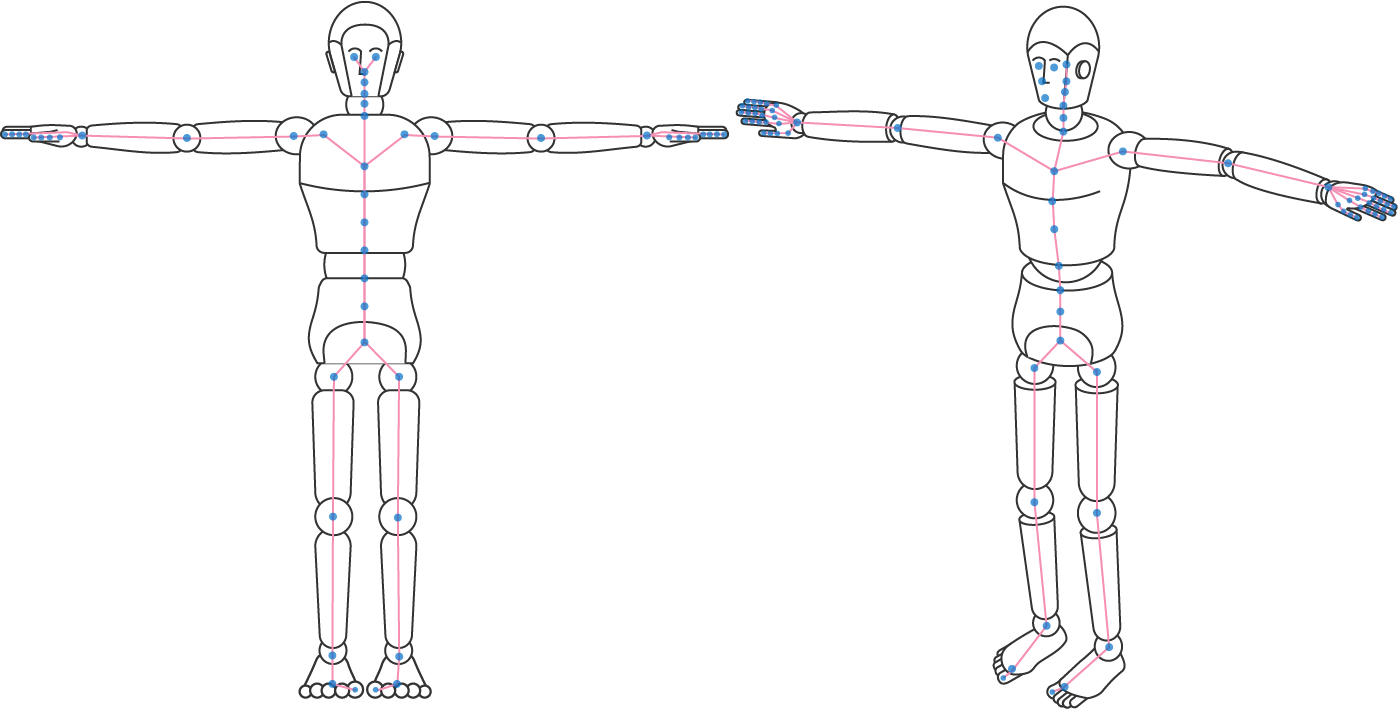
Image: Apple.
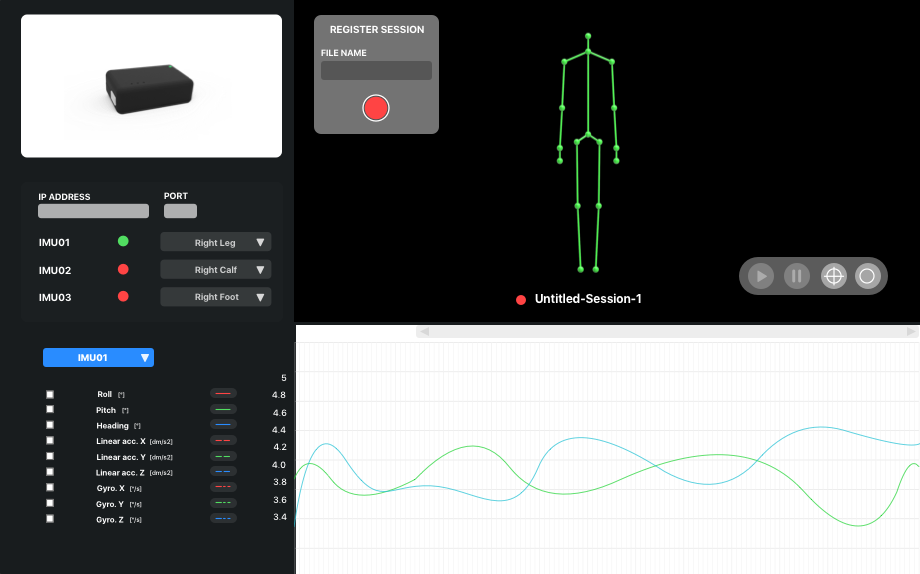
A session begins by associating each sensor with a point on the body. A resting pose establishes a shared frame of reference. As the wearer moves, the interface reconstructs the figure, reveals selected signals, and records the session as a continuous motion study.
From sensor to representation
Firmware running on each ESP32 reads fused orientation, linear acceleration, and angular velocity from the BNO055, then packages the measurements as labeled samples. The LabVIEW application interprets the stream, associates each node with its corresponding body segment, updates the spatial model and plots, and preserves the session as a delimited data file.
BNO055 nodes fuse 9-axis inertial measurements.
ESP32 firmware packages and sends labeled samples.
LabVIEW parses and routes each sensor packet.
The model, plots, and recording update together.
The desktop prototype listens through NI-VISA at 115,200 baud. Line feed (0x0A) separates the incoming ASCII samples:
sensorId, roll, pitch, heading, linAccX, linAccY, linAccZ, gyroX, gyroY, gyroZA Setup, Initialize, Run, and Stop state machine coordinates acquisition and rendering. The supplied VI uses a 200 ms processing and display interval, corresponding to a nominal 5 Hz application update.
Motion capture beyond the studio
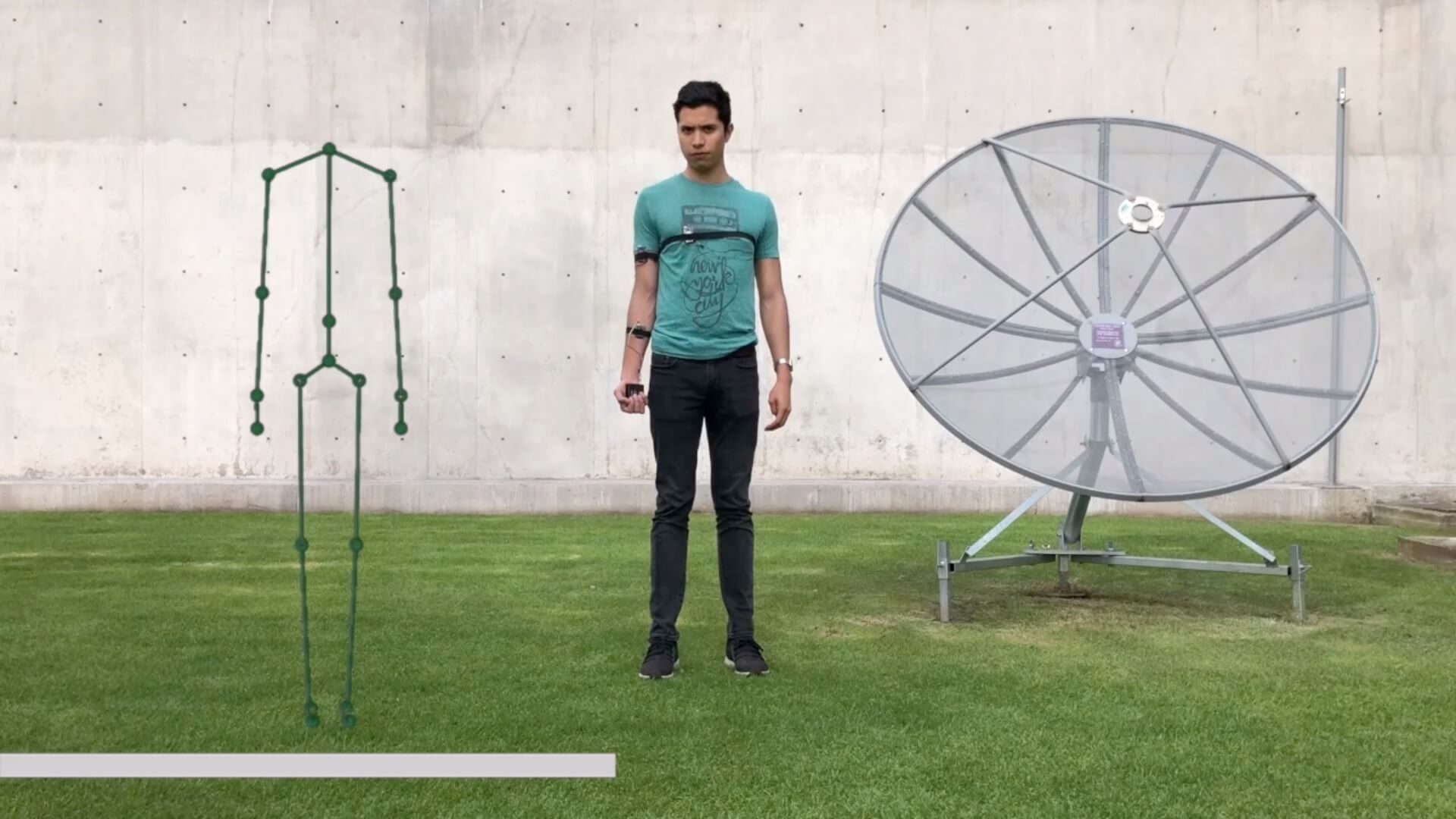
Because tracking lives on the body, a session is not tied to a camera volume. The wearable nodes can reconstruct movement wherever the person moves, while the interface keeps the measured body and the physical action visible together.
A sensor that belongs on the body
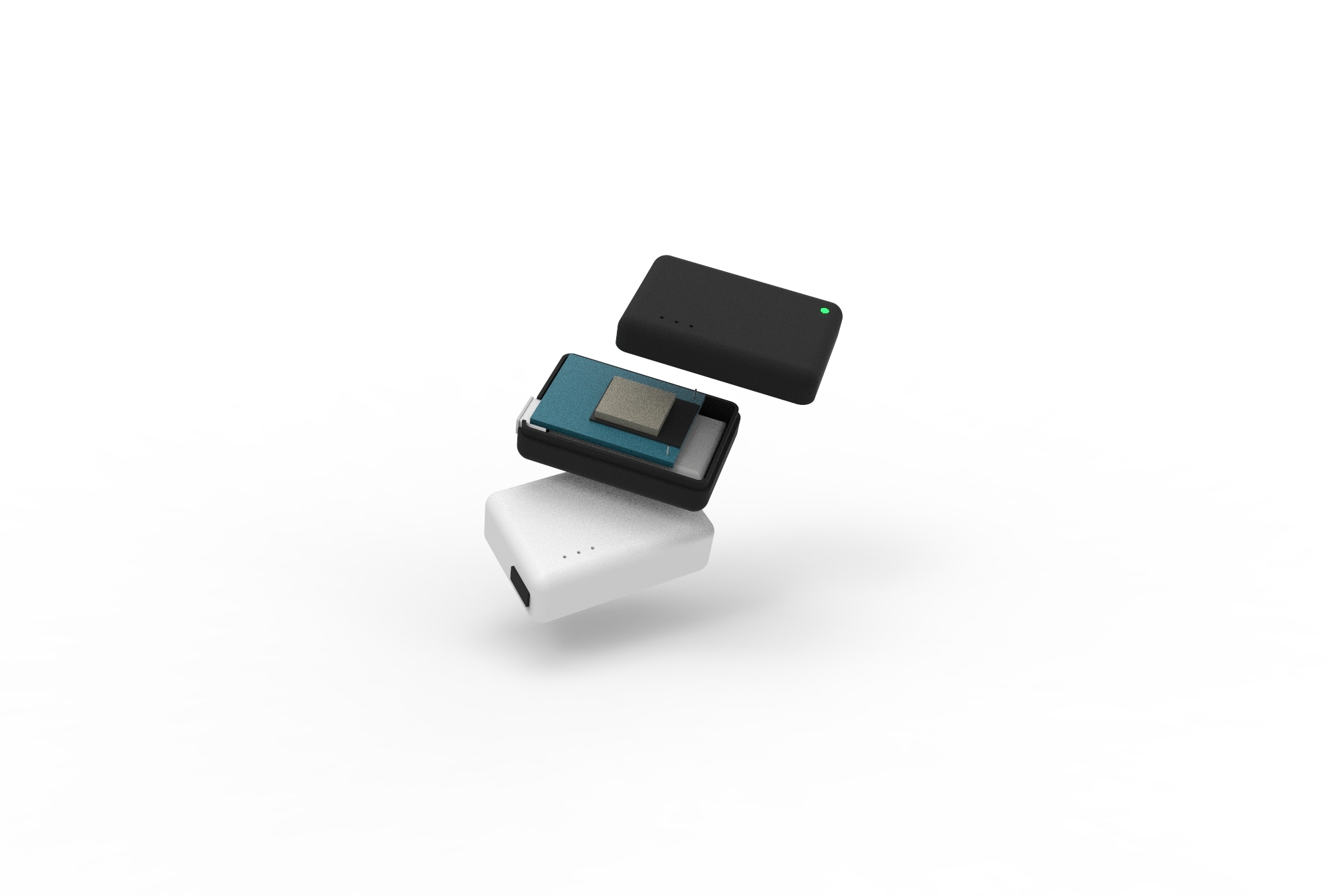
Each node condenses an ESP32, Bosch BNO055, and battery into a compact wearable object. The housing organizes the internal stack while preserving access to the external port and making device status visible at a glance.